2 min read
The Work Everyone Relies On but No One Wants to Own
In most organizations, localization gets done...
COMPLETE GUIDE
This guide gives you a clear, practical framework for making a confident, well‑informed decision, grounded in how your organization actually works today.
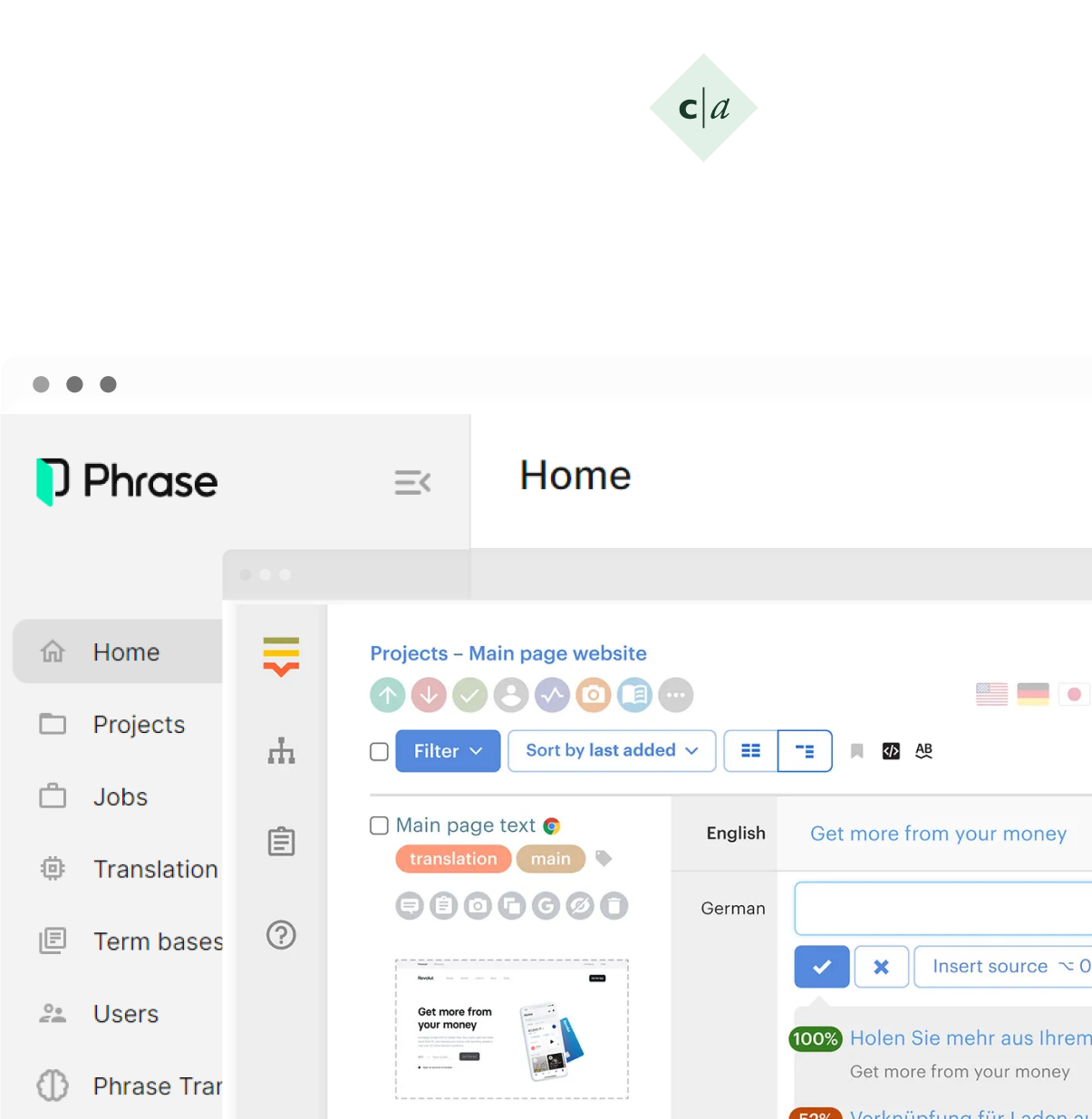
Most organizations exploring a Translation Management System (TMS) start in the wrong place. They jump straight into demos, compare features and try to make sense of long vendor presentations, hoping the right TMS will reveal itself through functionality alone.
But without a clear understanding of the underlying processes, even the most advanced platform will feel misaligned.
A tool built to improve translation workflows ends up creating new bottlenecks, and the investment becomes harder to justify. Not because the technology is flawed, but because the translation process it was meant to support was never fully understood.
.png?width=200&height=200&name=Jul%20(42).png)
"The right Translation Management System supports the way you work, strengthens quality and helps you grow without adding friction. The wrong one does the opposite, it slows things down and creates frustration."
Before teams even get to the point of choosing a system, many start comparing platforms like Phrase, Lokalise, Smartling, XTM, CrowdIn or Smartcat. These tools all solve similar problems, but in different ways. Some are built for fast, product‑driven localization, others for enterprise‑level governance and terminology control, and some focus more on collaboration.
All of them can work well, in the right environment. A TMS designed for agile software teams won’t automatically support regulated product content, and a platform built for heavy automation may not suit teams that rely on detailed linguistic review.
That’s why the question “Which TMS is best?” has no universal answer. The best system is the one that matches your actual workflow and the way your content is produced and reviewed.
This guide helps you understand those factors before you compare platforms, so you can evaluate each TMS based on what truly matters for your organization.

The guide gives you a clear picture of how your translation workflow actually works today, how content moves through the organization, where delays occur and what really creates friction.
It also explains what different TMS platforms are built for and why systems that look similar on the surface behave differently in practice.
You’ll learn how to evaluate vendors without getting fast‑tracked into feature lists, and what you should focus on in demos and conversations.
Finally, the guide gives you a realistic view of what it takes to introduce a new TMS in a real organization, based on how teams actually work rather than how vendors say they should.
FIVE EASY STEPS

A TMS is a platform that centralizes and automates the translation and localization of content across languages, markets and teams.
The right TMS reduces manual work, improves translation quality, lowers cost per market and helps you scale global content faster. The wrong one slows everything down.
This is a common situation.
In many cases, the issue is not the tool. The issue is the workflow around it.
The guide helps you understand whether the problem lies in configuration, process, ownership or expectations, and what steps you can take to achieve the value you originally expected.
If translations take too long, cost too much or vary in quality, it is usually a sign that the underlying process has grown organically and no longer scales.
Another signal is when teams rely on workarounds or manual steps to keep things moving. A modern translation workflow should support your daily reality, not slow it down.
There is no single best TMS because every organization works differently.
The right system depends on your content types, workflows, level of automation, integration needs and how your teams collaborate.
A platform that works well for a marketing‑driven organization may be a poor fit for a company with extensive product documentation or regulatory content.
The best TMS is the one that matches your real workflow, not the one with the longest feature list.
There are several well‑established TMS platforms used by global organizations.
Some focus on automation and integrations, others on linguistic quality, developer workflows or enterprise governance.
Commonly evaluated systems include Phrase, Lokalise, Smartling, XTM, Crowdin and Smartcat.
They solve similar problems in different ways, and their strengths vary depending on your workflow, content volume and technical environment.
Not all companies need a TMS.
A TMS is most valuable when you handle recurring translations, multiple languages, complex review steps or large volumes of content.
If your workflow is simple or infrequent, other solutions may be more efficient.
Timelines vary depending on workflow complexity, integrations and internal alignment. Some teams get started within weeks, while others need more time to map processes and adjust responsibilities.
The biggest factor is not the tool. It is how prepared the organization is.
Pricing varies widely depending on volume, number of users, automation needs and integrations.
Some platforms charge per word, others per seat or per project. The biggest cost driver is usually workflow complexity, not the tool itself.
A CAT tool supports the translator’s work. A Translation Management System supports the entire workflow around it, including content intake, automation, review, terminology, collaboration and reporting.
Many organizations use both.
Yes. Platforms such as XTM and Phrase are often used for structured content, terminology control and multi‑step review processes that are common in manufacturing and medtech.
Not exactly. The terms are often used interchangeably in marketing, but they are not the same.
A localization platform is typically built for software teams and focuses on continuous localization, version control, developer workflows and integrations with code repositories.
A TMS manages the broader translation workflow across an organization, including content intake, automation, review steps, terminology, collaboration and delivery.
Latest Articles
Annica Heuermann: Jun 29, 2026
Annica Heuermann: May 21, 2026
Simon Giulja Ahl: May 21, 2026